If you've been paying attention to AI over the past three months, you've noticed a shift. The conversation has moved from "look what this chatbot can do" to "look what this agent just did on its own." We're watching a fundamental transition from conversational AI to agentic AI, and it's happening faster than most predicted.
What Is Agentic AI, Exactly?
Traditional AI assistants wait for your prompt, generate a response, and stop. Agentic AI is different. These systems can break down complex goals into sub-tasks, use tools (APIs, databases, web browsers, code interpreters), make decisions based on intermediate results, and iterate until the objective is complete. Think of it as the difference between a calculator and an employee.
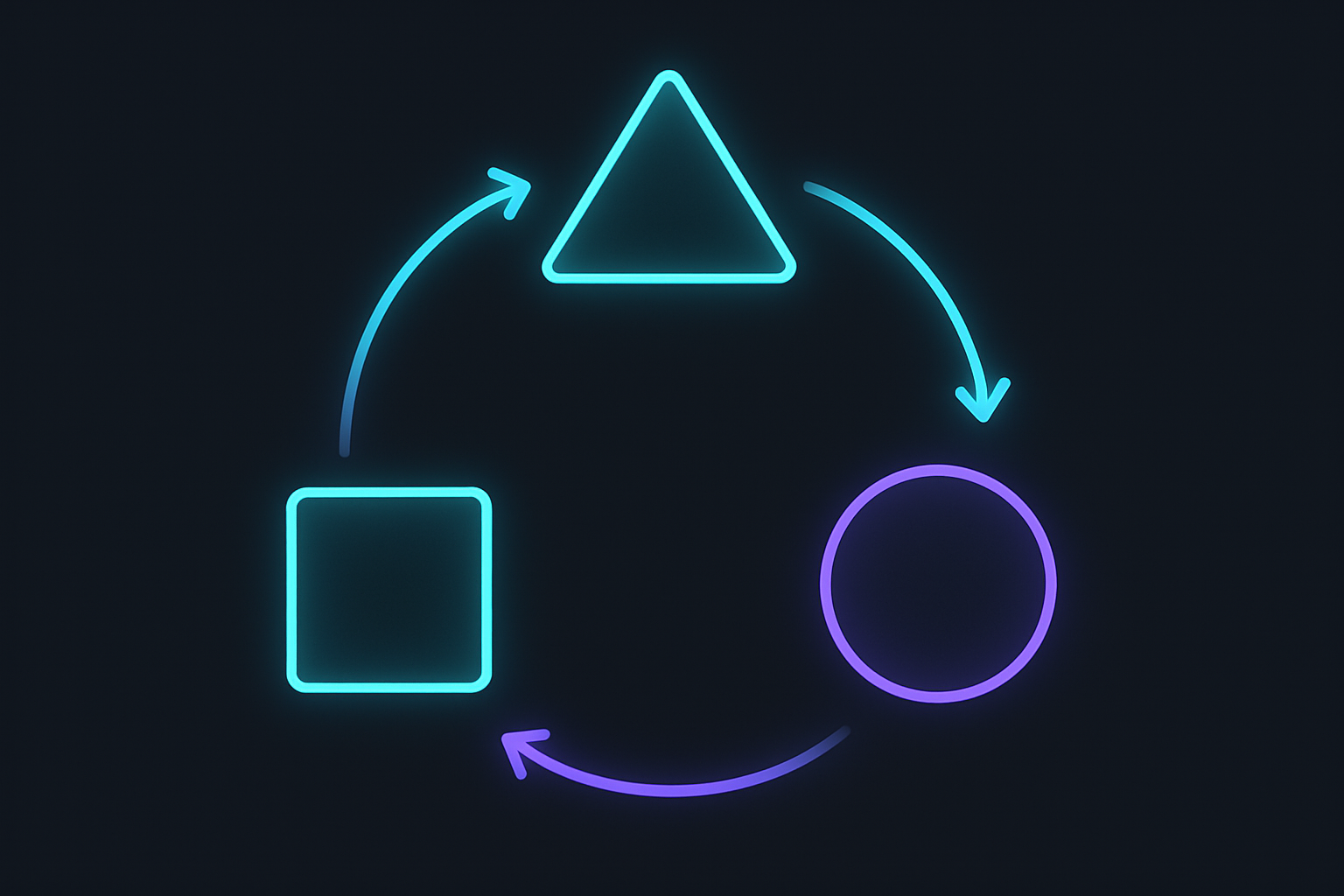
The architecture typically follows what researchers call the ReAct pattern: Reason about the task, Act by calling a tool, Observe the result, then Reason again. This loop continues until the agent determines the task is complete or it needs human input.
Why Now?
Three converging forces are making 2026 the inflection point:
- Context windows exploded. GPT-5.4 now handles 1 million tokens. Claude Opus 4.6 matches that. Agents need long context to hold plans, tool results, and conversation history simultaneously. A year ago, that was a bottleneck. Now it isn't.
- Tool use became native. Every major foundation model now ships with structured tool-calling capabilities. The models don't just generate text that looks like a function call — they generate actual structured outputs that reliably invoke external tools.
- The economics flipped. Morgan Stanley's March 2026 report warns that a "transformative AI leap" is imminent, driven by unprecedented compute accumulation and scaling laws that refuse to plateau. The cost per token has dropped to the point where running an agent loop with 50+ tool calls is cheaper than a single hour of human labor for equivalent tasks.
Where Agents Are Already Working
This isn't theoretical. Agentic systems are in production today across multiple domains:
Software Engineering
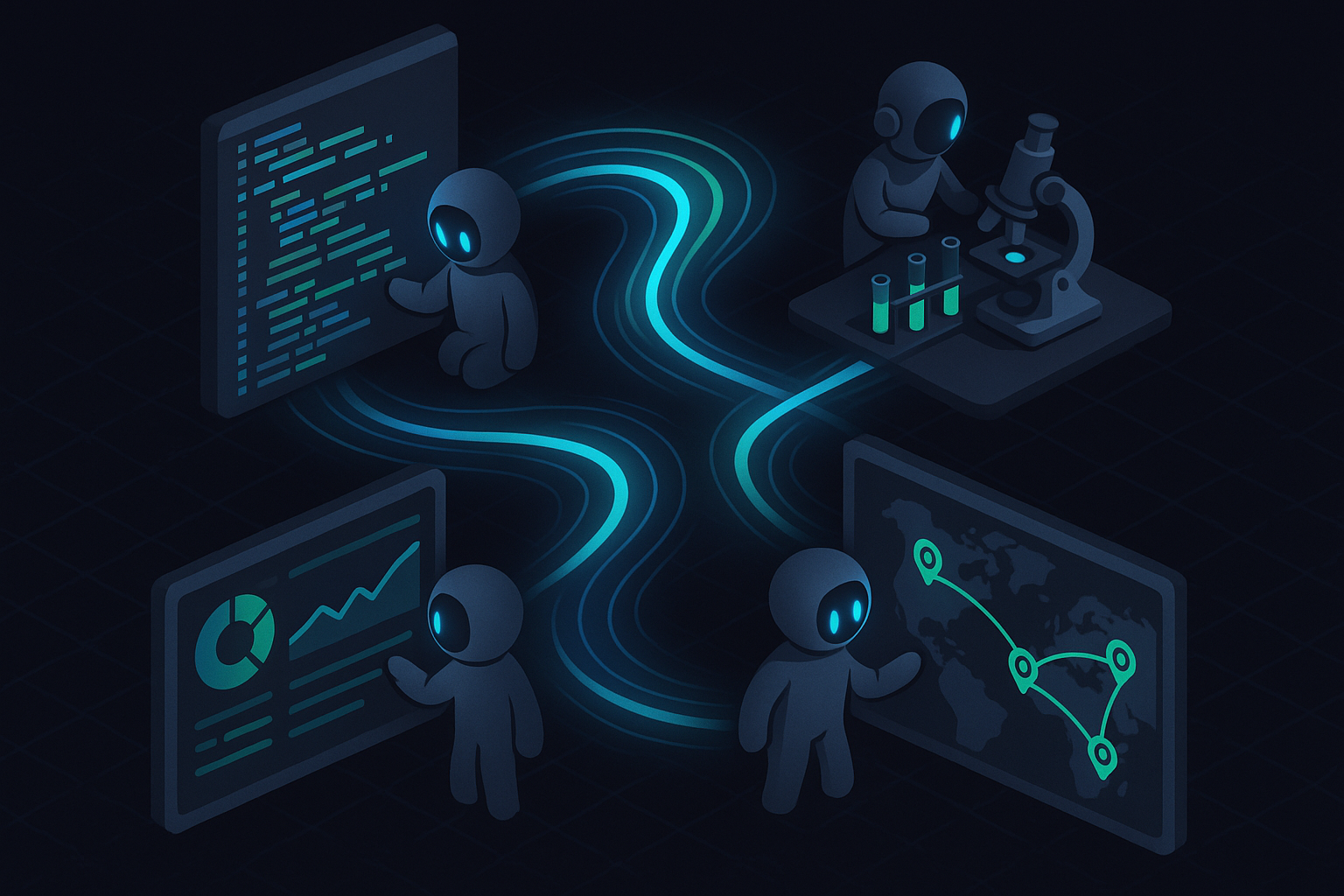
AI agents now handle end-to-end code generation, testing, and deployment. The recent Cursor-Kimi controversy revealed just how deeply agentic AI has penetrated developer tools. Cursor's Composer 2 was discovered to be built on top of Moonshot AI's Kimi K2.5, a Chinese open-source model, highlighting how agents are quietly becoming the backbone of development workflows.
Enterprise Operations
Finance, HR, customer support, and supply chain management are all seeing agentic deployments. These agents don't just answer questions about policies — they execute multi-step processes: reviewing invoices, flagging anomalies, routing approvals, and updating records. Alibaba's Qwen 3.5, released in February, was explicitly designed for these "agentic" workflows, including analyzing videos up to two hours long.
Scientific Research
MIT Technology Review's 2026 outlook predicted that AI would move from summarizing papers to actively participating in discovery. That's already happening. Agents are generating hypotheses, designing experiments, and analyzing results. Every scientist now has the potential for an AI lab assistant that never sleeps.
What This Means for Data Scientists
If you're building models and pipelines, agentic AI changes your job in three ways:
- You're building agents, not just models. The valuable skill set is shifting from "train a model" to "orchestrate a system." Understanding tool design, memory management, and error recovery patterns matters as much as understanding gradient descent.
- Evaluation gets harder. How do you test a system that takes different paths each time? Agent evaluation requires new frameworks — not just accuracy metrics, but measures of efficiency, cost, reliability, and safety across diverse execution traces.
- The data pipeline is the product. Agents are only as good as the data and tools they can access. Building robust, well-documented APIs and clean data sources becomes the highest-leverage work you can do.
The Open Source Factor
One of the most interesting dynamics in 2026 is the surge of Chinese open-source AI models powering agentic systems globally. Silicon Valley startups are quietly shipping products on top of models from Alibaba, Moonshot AI, and DeepSeek. This democratization means you don't need a billion-dollar compute budget to build sophisticated agents. You can run capable models on modest hardware, especially with the rise of edge and on-device AI.
What I'm Building
This is exactly why I've been working on my own research agent project — an AI system that searches the web, summarizes papers, and answers complex questions through multi-step reasoning. It's a hands-on way to learn the patterns that matter: tool design, memory management, the ReAct loop, and graceful failure handling.
If you're a data scientist and you haven't built an agent yet, now is the time. The barrier to entry has never been lower, and the gap between "understands agents" and "doesn't" on a resume is only going to widen.
Looking Ahead
Morgan Stanley's warning that "most of the world isn't ready" resonates. The companies and individuals who are experimenting with agentic systems now will have a significant advantage when these tools become the default way software gets built and operated. The shift from assistant to agent is not a trend — it's a phase change. And we're right in the middle of it.
The best time to start building agents was six months ago. The second best time is today.