If you're a data scientist in 2026, GPU compute is probably your biggest variable cost. Whether you're fine-tuning a 7B parameter model for a side project or training a production classifier on company data, the question of where to run that compute — cloud, marketplace, or your own hardware — can mean the difference between a $50 experiment and a $5,000 one.
I've been tracking GPU pricing closely as I've scaled up my own ML projects, and the landscape has shifted dramatically in the last twelve months. Here's what I've learned.
The State of GPU Pricing in Q1 2026
The headline number: NVIDIA's H100 has dropped from ~$8/hour in early 2024 to under $3/hour on most cloud marketplaces by March 2026. That's a 60%+ decline in two years, driven by supply catching up with demand and the arrival of next-generation Blackwell hardware.
Meanwhile, the new NVIDIA B200 — Blackwell's flagship data center GPU — has entered the cloud market with pricing that ranges wildly depending on where you rent:
| GPU | Cloud Price Range | Typical Rate |
|---|---|---|
| B200 | $2.25 – $16.00/hr | ~$4.95/hr avg |
| H200 | $3.72 – $10.60/hr | ~$5.50/hr avg |
| H100 | $2.00 – $10.00/hr | ~$2.99/hr median |
The 7x price spread on B200s tells you everything about the current market: where you buy matters as much as what you buy.
Cloud vs. On-Prem: The Real Math
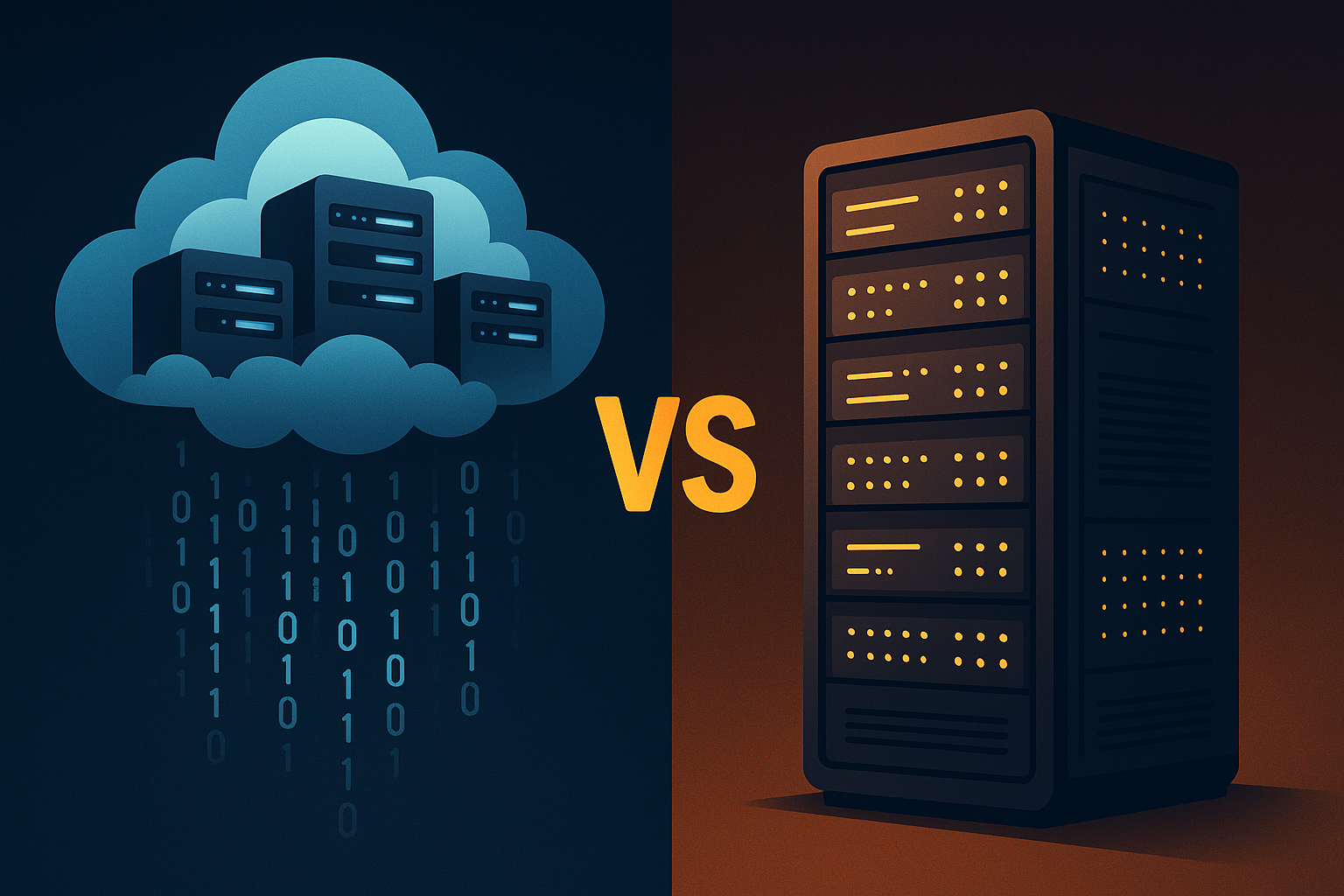
The buy-vs-rent decision comes down to utilization. Here's the simplified calculus:
If you're running GPUs less than 30% of the time, cloud wins. For one-time training runs or infrequent model updates, cloud compute is approximately 12x more cost-effective than purchasing hardware. You pay for what you use and walk away.
If you're running GPUs more than 70% of the time, on-prem wins. A DGX B200 system at $275,000 delivers 72 PFLOPS of FP8 compute — roughly 2.25x the performance of a DGX H100 at $200,000, making it 64% more cost-efficient per FLOP. At continuous utilization, the breakeven against cloud rental is typically 8–14 months.
The 30–70% utilization zone is where it gets interesting. This is where most data science teams actually operate, and it's where marketplace providers and reserved instances create real savings.
The Marketplace Advantage
The biggest pricing insight of 2026 is this: many teams default to their existing cloud provider (AWS, GCP, Azure) and overpay by 40–60% compared to GPU marketplace alternatives.
The numbers are stark. A fine-tuning job on a 6–13B model costs roughly $4,260 on GCP, $2,700–$2,900 on AWS/Azure, and as little as $869 on specialized GPU-as-a-service platforms. That's an 80% savings for the same compute.
Spot pricing makes the gap even wider. B200 spot instances are available at $2.25/hour compared to $14.25/hour on-demand on AWS — a 6x difference for the same GPU. The trade-off is preemption risk, but for fault-tolerant training jobs with checkpointing, spot is nearly free money.
What This Means for Personal Projects
For individual data scientists working on portfolio projects, side experiments, or learning — here's my practical framework:
Fine-tuning (most common use case)
Fine-tuning a 7B model with LoRA/QLoRA costs approximately $50–$500 on a GPU marketplace, compared to $500–$5,000 with full fine-tuning. The key enabler is parameter-efficient methods: LoRA reduces VRAM requirements enough that a single RTX 4090 (24GB) can handle a 7B model. Fine-tuning costs just 1–5% of training from scratch, requires 10–100x less compute time, and needs only 1–8 GPUs instead of 64–128.
Local hardware
If you're doing regular fine-tuning or inference work, a consumer GPU with 24GB VRAM is the sweet spot. An RTX 4090 can run and fine-tune 7B–13B models locally with QLoRA. For learning and smaller models (3B–8B), even an RTX 4060 Ti with 8GB gets the job done at 10–20 tokens/sec.
Cloud for bursts
For anything bigger — training runs, 70B model inference, multi-GPU experiments — rent on a marketplace with per-second billing. Platforms like RunPod, Lambda, and Together AI offer H100s starting at $3.39/hour and serverless inference that scales to zero when you're not using it.
The Trend Line
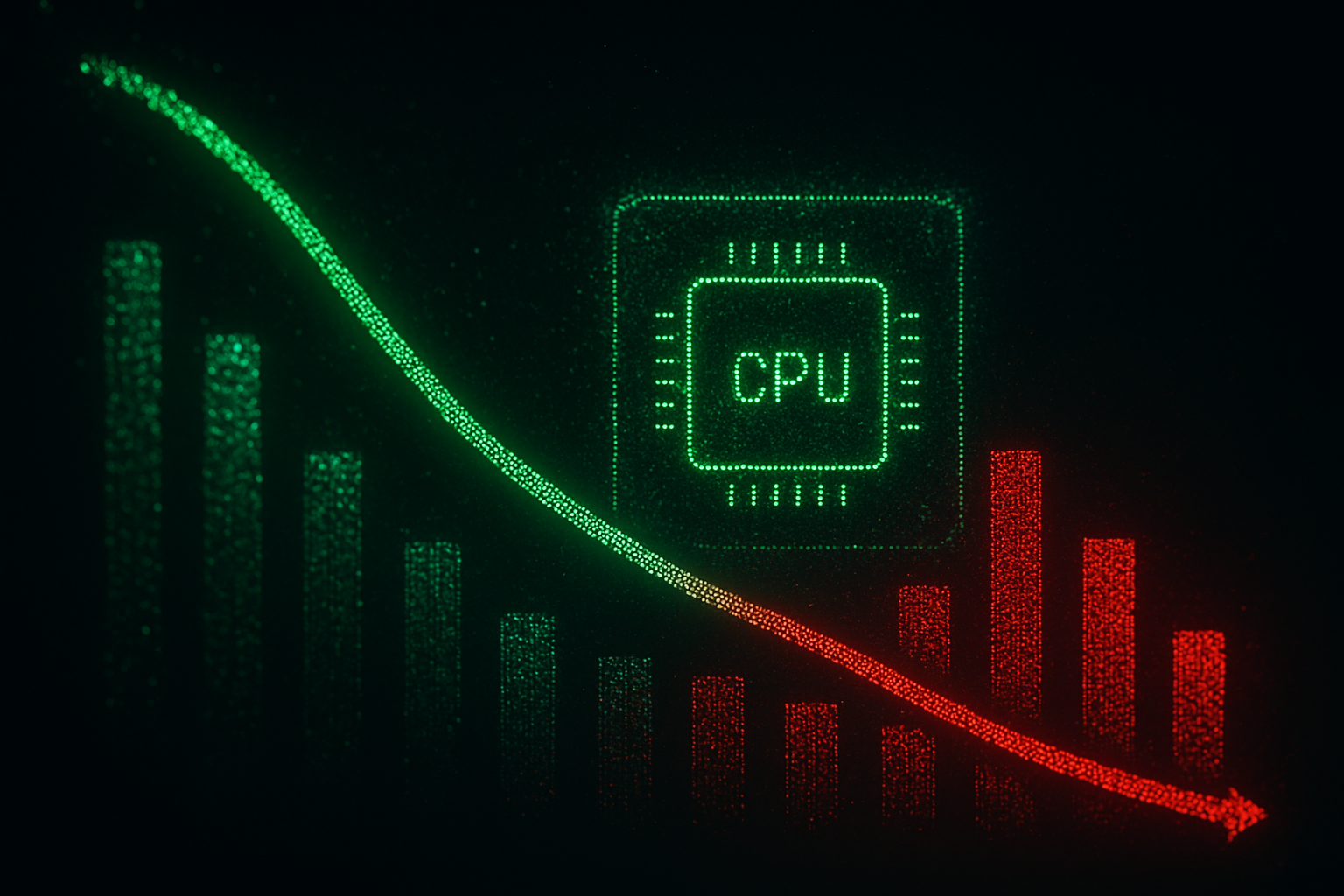
Analysts predict another 50–70% price decline in B200 cloud pricing over the next 6–12 months as production scales, mirroring the H100's trajectory. Combined with continued improvements in parameter-efficient training methods and model distillation, the cost floor for meaningful ML work keeps dropping.
Two years ago, fine-tuning a language model was a resource-gated activity that required institutional backing. Today, a data scientist with a $500 cloud budget and the right techniques can fine-tune a model that would have been state-of-the-art in 2024.
Practical Takeaways
- Don't default to your cloud provider. If your training run exceeds $500, spend 30 minutes comparing marketplace alternatives. The savings are real and significant.
- Use parameter-efficient methods. LoRA and QLoRA aren't just cost optimizations — they're the difference between needing an 8-GPU cluster and a single consumer GPU.
- Match hardware to workload. Inference, fine-tuning, and training have different cost profiles. A B200 that's 4x faster at inference might not be 4x better value if you're running a 2-hour fine-tuning job.
- Checkpoint aggressively, use spot. If your training pipeline supports resuming from checkpoints, spot instances at $2–3/hour versus $14/hour on-demand is the highest-ROI optimization available.
The cost of compute is no longer the barrier to entry for ML. The barrier is knowing how to spend efficiently. In 2026, a thoughtful $200 cloud budget goes further than a careless $2,000 one.